Posts

Showing posts with the label Speech Writing

How to Start a Speech With a Bang (and Keep Everyone Awake!)

Image
Let’s face it—public speaking can be nerve-racking. You step up to the podium, clear your throat, and see an ocean of faces, some eager, some distracted, one possibly asleep. The truth is, those first few sentences can decide whether your audience becomes engaged listeners or enthusiastic phone users. So, let’s talk about how to start a speech with a bang, using easy, plain English, practical examples , and a bit of comic relief (but nothing that’d make your nan blush).   Why Do First Impressions Matter? Imagine you’re at a birthday party. Someone comes over and says, “Hello, I’m here to talk about dental insurance. Please take a seat.” Fun? Not so much. Now imagine someone walks in and says, “Who here loves popcorn? By the end of my talk, you’ll wish you brought extra!” Suddenly, you’re curious—even if you’re not a popcorn fan. The opening of your speech is that vital ‘hello’. It’s your chance to promise something interesting, spark curiosity, and make people want to list...

What Really Sticks? My Presentation Fails and How You Can Do Better

Image
  Let’s be honest giving a talk or presentation can be nerve-wracking. For ages, I believed that if I packed in loads of facts and spoke with enthusiasm, my listeners would remember everything. Fast forward a few years and, with a bit of bumped ego, I discovered the hard way: people forget most of what we say. Maybe you’ve felt the same sting—wondering afterwards, “Did anyone take anything away from that?” Well, let me share some stories (yes, the ones where I went wrong!), what I learnt, and how you can make your sessions stick in people’s minds.   Why Do Audiences Forget So Much?   Before we dive in, here’s a bit of science (but don’t worry, no jargon—lesson learnt, as you’ll see). A German psychologist, Hermann Ebbinghaus, discovered over a century ago that people forget almost “ 70% of new information within 24 hours ”. That’s right: most of your precious presentation will just float away by tomorrow!   Why? Because our brains can only take in so mu...

The Three C's of Public Speaking: Confidence, Clarity, and Connection

Image
Public speaking can be a nerve-wracking experience for many individuals. Whether it's delivering a speech, giving a presentation, or engaging in a professional discussion, effective communication is essential. While mastering the art of public speaking takes time and practice, there are three fundamental elements that can significantly enhance your performance: Confidence, Clarity, and Connection. In this blog, we will explore each of these three C's and provide valuable tips to help you become a more confident and engaging speaker.   1. Confidence: Confidence is the foundation of successful public speaking. When you project confidence, your audience is more likely to pay attention, trust your message, and be inspired by your words. Here are a few strategies to boost your confidence:   a. Preparation: Proper preparation is crucial to building confidence. Research your topic thoroughly, organize your thoughts, and rehearse your speech or presentation. The more you kno...

ARE SLIDES THE BEST WAY TO PRESENT

Image
slides – is it important? Do you always pull out slides or projector when you are having an important conversation with your friend or relative in a restaurant. Rather that will be the odd thing to do. We look into their eyes and give them the proper / full attention along with the words. They feel important and start taking your words seriously. This, I know will raise a question: then why do we use slides? If you look at the maximum of the best speeches of all time, you will not find any use of slides. Though there are question: would these speeches have been better if they were narrated over slides? In many cases, no. You’d have to listen carefully to figure out when ideas would be better presented visually rather than with words alone, which is the secret for thinking about your own presentations: when do you truly need a visual image to express an idea? And when would it be better simply letting your voices tell the story? Most of the time we speak with sl...

HOW TO REHEARSE YOUR SPEECH

Image
Every Saturday I take my son to his music teacher, the different ways of practice that his teacher teaches him is equally applicable to public speaking. Whenever he made a mistake, she got him to start from a few notes before the mistake and carry on a few notes after the mistake, rather than going back to the start each time. This meant that the part of song that needed the most practice got it, rather than becoming excellent at the first part of the piece and then gradually getting worse as it went on. She also made him practice in various styles and speed. This kept him interested and also started making him versatile. It is good idea to aim to memorise your speech and have notes or cue cards to refer when needed. But as you get confident you should aim to become less reliant on your notes and to leave the script behind at times and just go with the flow. You may find yourself with a different audience to what you prepared for and they may appreciate a different angle on yo...

HOW TO CAPTURE THE AUDIENCE ATTENTION IN THE FIRST SECONDS OF YOUR SPEECH

Image
The biggest fear of public speaking is what would my audience say? What happens if they are not interested? Capturing the audience attention is challenging, and from the onset is daunting. But if you can do it, you will be hooked on to public speaking. In today’s fast world, especially with so much portable gizmos, the speaker has to grab the audience attention from the word go or they may start doing other thing.  Here’s some tips of capturing the audience attention from the word go. Get acclimatised:   Join the crowd before the presentation. The last few minutes is not for going through you notes but mingling with them. This helps you to get rapport with the future audience, know them. This may help you to tweak your speech at the last minute to suit their needs. Moreover it will help you to be at ease in the presentation, by having some familiar faces in the audience. When you stand up to speak, first smile, look around the room and make eye contact with s...

TOOLS OF EXPERIENCED SPEAKER

Image
Most people would undergo a surgery without  anesthesia  than standing up in front of a crowd and make a speech, even if it is among the spears. Though the most efficient and effective way of getting noticed (or  recognize ) is to make a presentation or speech in front of a group of people that supports your knowledge, intelligence, and strengths. If the presentation is good people will not only notice your intelligence, also your presentation skills. The biggest fear a person faces is “What if I make a fool of myself?”   To be honest every speech is a prime opportunity to do something or say something that may come across as foolish, and this is true for every speaker to the novice to the most experienced. A joke may tank, a remark may be delivered incorrectly or you may take a false step. The experienced speaker just has some tools in their arsenal to  minimize  the risk of this happening. In this article, I am attempting to list f...

SPEAKING PACE (WORDS PER MINUTE)

Image
As a speaker there are few questions which we all face What is the correct speed in a speech? Is your pace of delivering speech fast,slow or just right? And what is a normal speaking pace? The answers are not straight forward. The most common way to express one speaking pace is in words per minute (wpm). To calculate this one has to simply divide the number of words spoken by number of seconds. Speaking pace Studies suggest that the pace of a speaker depends on multiple of things like his/her culture, geographical location, subject matter, gender, fluency to even their emotional state.  However there are some guidelines which are widely accepted Slow speech is usually regarded as less than 110 wpm, or words per minute. Conversational speech generally falls between 120 wpm at the slow end, to 160 - 200 wpm in the fast range. People who read books for radio or podcasts are often asked to speak at 150-160 wpm. Auctioneers or commentators who practice speed s...

STORY TELLING – AN ENGAGING WAY FOR PRESENTATION – PART 2

Image
In the previous blog “ STORY TELLING – AN ENGAGING WAY FOR PRESENTATION –PART 1 ” we have discussed the benefits of presenting the ideas by storytelling techniques and techniques of achieving the same. The 4 techniques of storytelling are: Journey of a Hero   - Journey of an ordinary person to the unknown. While treading the path he discovers his powers and emerges as a hero The Obstacle  -  The journey building up to the Final Finale – The Climax Plunge  - Start of the journey with a plunge to the climax and then just before the finish start the flashback Silver lining – The path that can change the hope to become a reality Here in this blog we will carry on and discuss 4 more techniques of storytelling Nest    Nest is a story telling techniques where your main or most important story is layered by two or three minor stories. All the stories are minor stories have to be interrelated. Your second story should start as a continu...

STORY TELLING – AN ENGAGING WAY FOR PRESENTATION – PART 1

Image
In order to garner audience attention public speaker needs to take them on a journey, leaving them feeling inspired and motivated. They need to structure their speech to get the ideas across; keeping the audience engaged all the way, which is a very tricky proposition.  Story telling is one of the most exciting way to put across your ideas Why Story telling You are doing a presentation, so the natural tendency is to start with facts and figures highlighting the facts you want to get across. We think that s the best way. WRONG!! Humans are hardwired for stories. They love heroes, journeys, surprises, layers and happy sometimes tragic endings. Deliver a presentation that captures the hearts and heads of the audience by taking them alongside the journey. Deliver the facts and figures disguised in the story. The moment they start relating to the story, you will have their unconditional attention. They biggest question public speakers face is – HOW? Here I would be detailing...

NOBODY CARES WHAT YOU WANT TO SAY!

Image
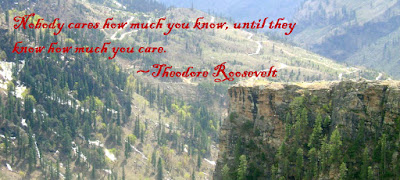
Nobody Cares! Believe it or not, it's true - not single person in your audience cares about you. You and your story. You and your success. You and your obstacles. You and your genius ideas. Even if your mom, spouse, or kids are in the audience - they don't care about you either. Humans are an egotistical lot. Only they care about is themselves. To be honest we love our name the most, even if we say to others even sometimes ourselves that we don’t love our name. That doesn’t mean we don’t like other person, we hear the story of success and adventure, because it affects us, it gives us the ambition and push to start believing that we can do. Why do you think, that underdog stories are the most successful stories in the world. Its one and only because it’s helps us to believe that we can do it, we also can be the best, in short it suits our egoism. While constructing a speech this is the first thing that we have to make sure, that in our speech there is something...